How a Philanthropic Profile Gets Built
A guided walkthrough of the WellAdvised conversation. How a Philanthropic Profile gets built, from intake to AI synthesis, in 15-20 minutes.

Jeff Golby
CEO & Co-Founder, WellFunded
Key Takeaways
- The Philanthropic Profile builder walks the client through six steps: Intake, Giving, Values, Focus, Enrichment, Plan.
- The advisor can invite the client to complete the questions at home. The analysis and synthesis happen together, preserving the relationship while removing the manual labour.
- Almost every question offers an optional context field. The more the client shares, the richer the resulting Philanthropic Profile.
Most clients have given to charity for years without anyone ever asking them to articulate why.
The Philanthropic Profile builder inside WellAdvised is the conversation that finally does. Here's how it works.
The six steps: Intake. Giving. Values. Focus. Enrichment. Plan.
Here's just a sample of what this looks like. Get in touch to see a live demo today.
Where They've Been
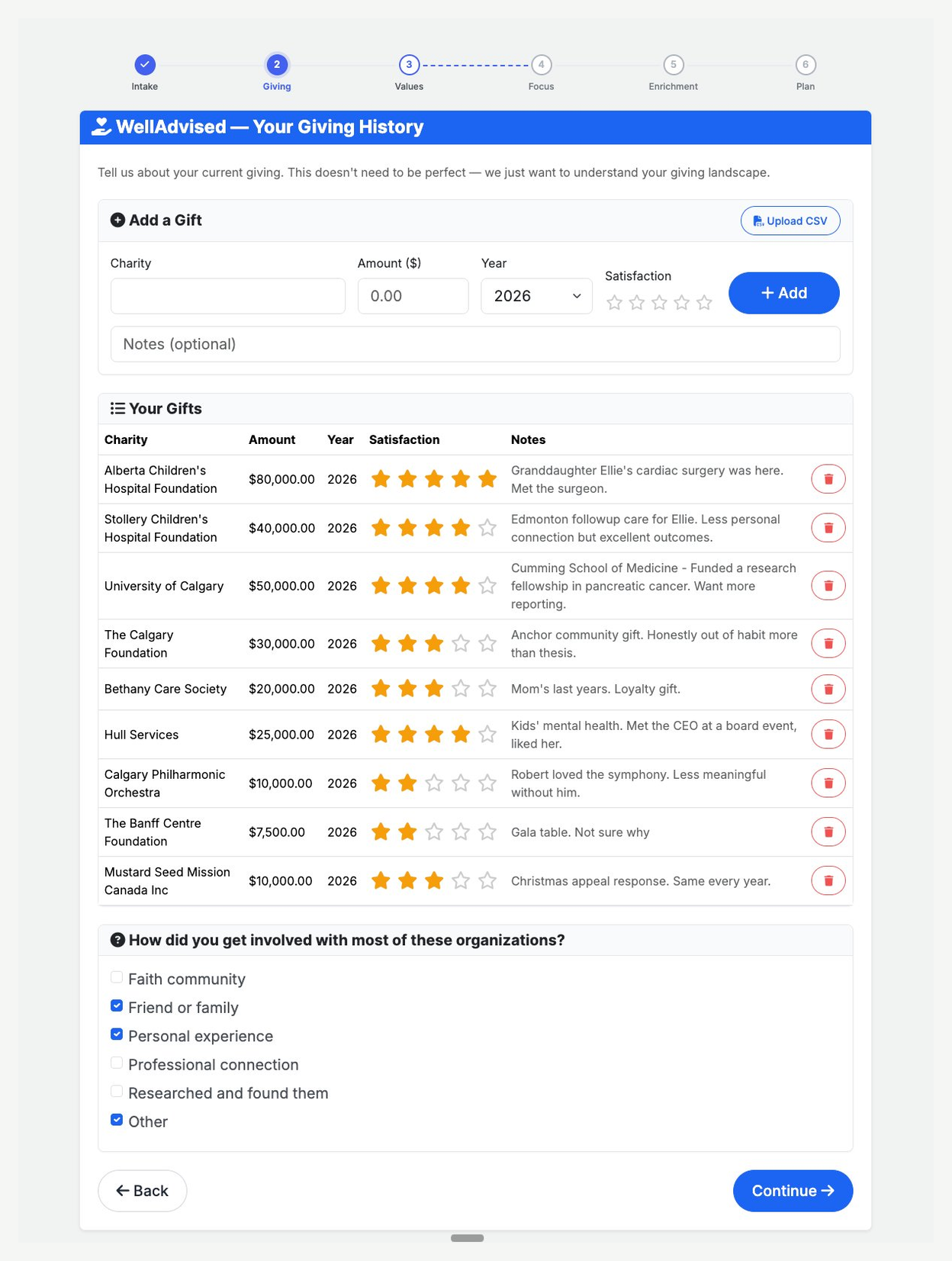
Every client has given something to charity. Whether that's at a checkout, a nephew's school, or a long-running annual commitment, the giving is already happening.
The client adds the charities that come to mind and rates each one. Five stars for a gift that felt right. Two stars for one that didn't quite land. Notes for the gifts that have a story behind them. Then a single question that tells the advisor more about this client than most surveys do: How did you get involved with most of these organizations?
What They're Aiming For
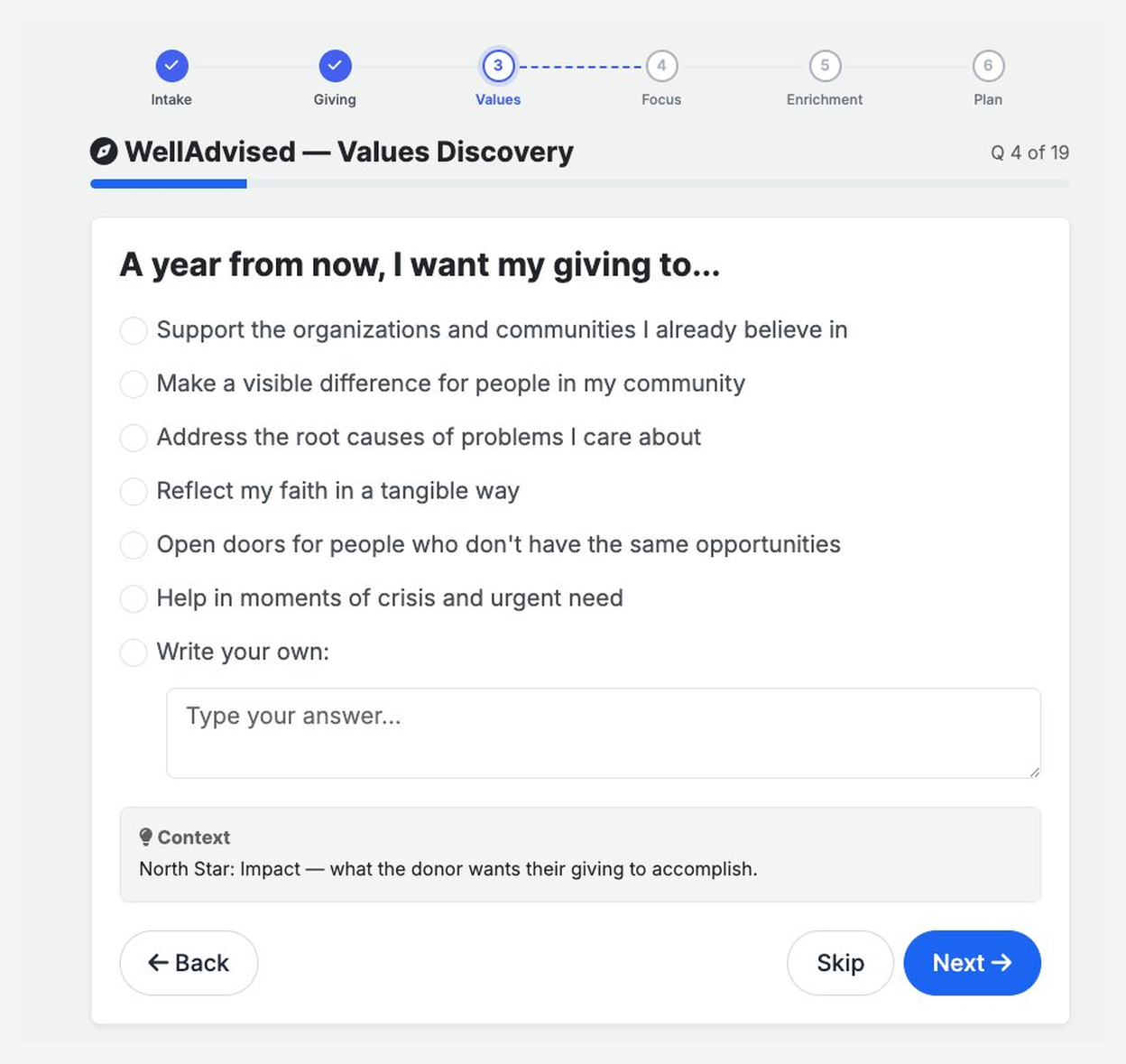
Three or four quick prompts to help the client consider how they want their giving to feel a year from now. This is the North Star the rest of the session works toward.
For the advisor, this is the line. A year from now, I want my giving to make a visible difference for people in my community. That's the answer that anchors every decision that follows.
What They Care About
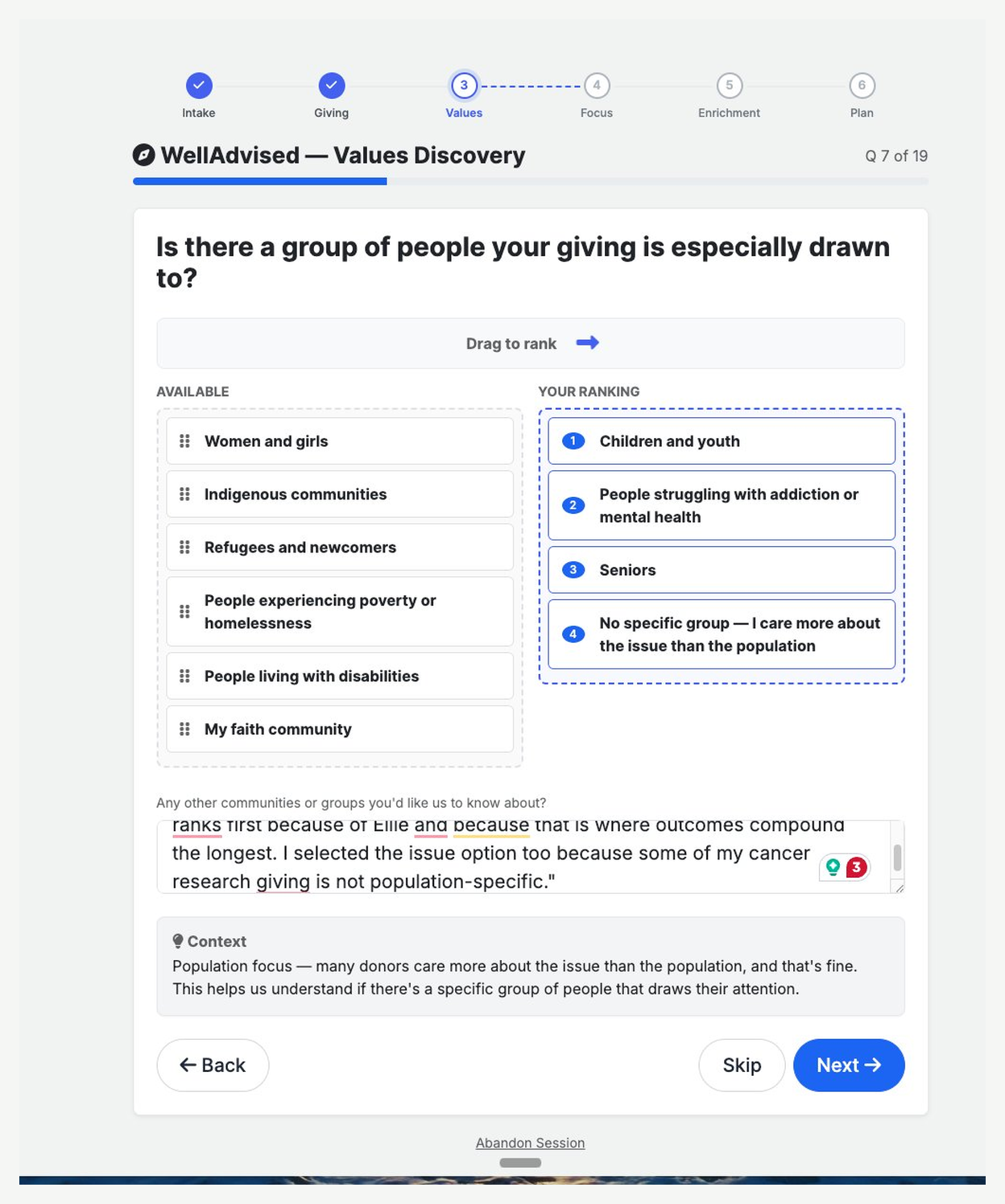
A series of questions to surface what the client actually cares about. Who do they want to serve? Where in the world do they want to give? What relationship do they want with the organizations they support, close and engaged, or trusting and at arm's length?
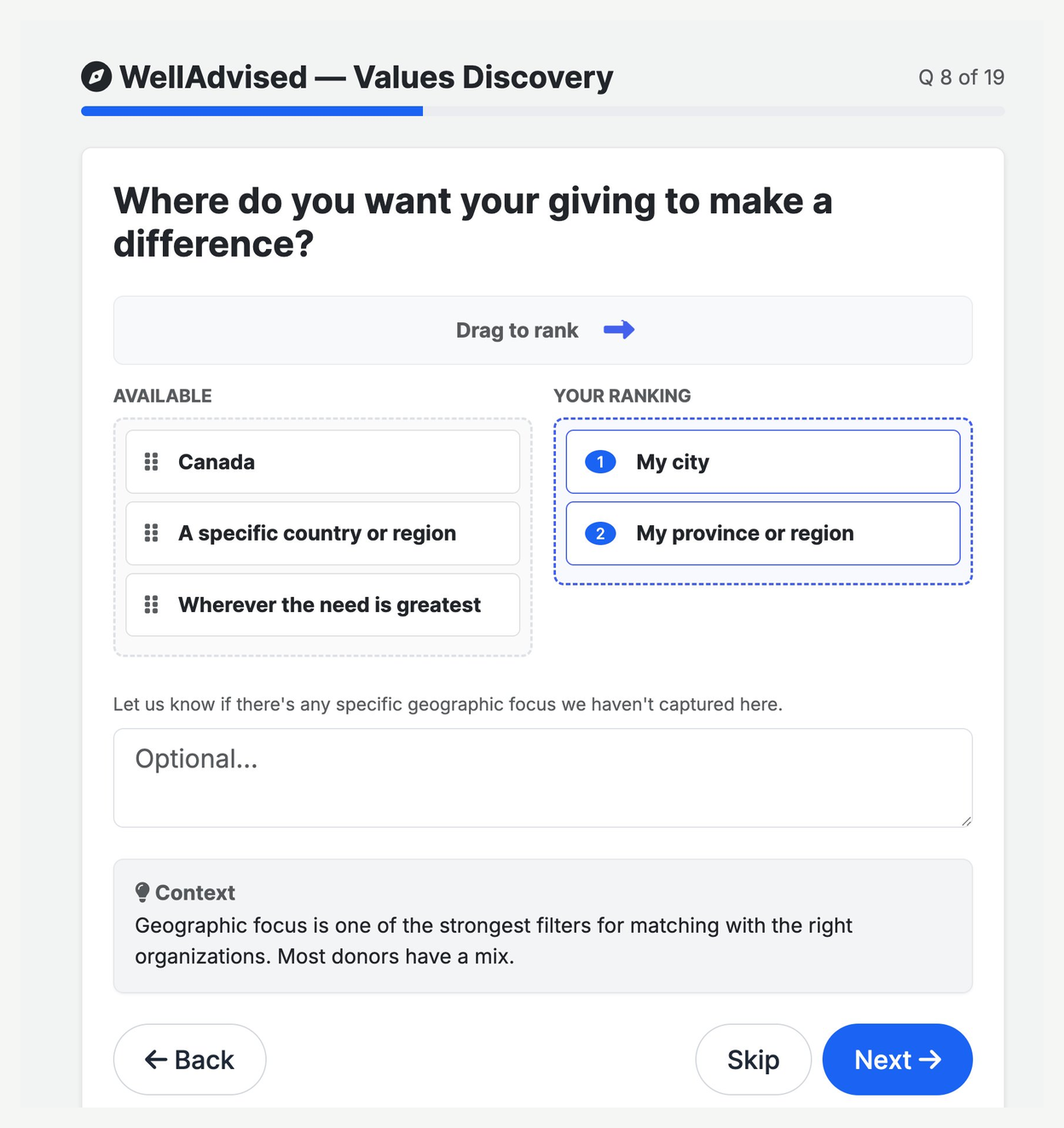
The ranking exercises are the moments most clients stop and think. They drag the populations and places they're drawn to into order, leave the rest behind, and tell the advisor in two minutes what twenty years of giving has been quietly trying to say.
How They Want To Give
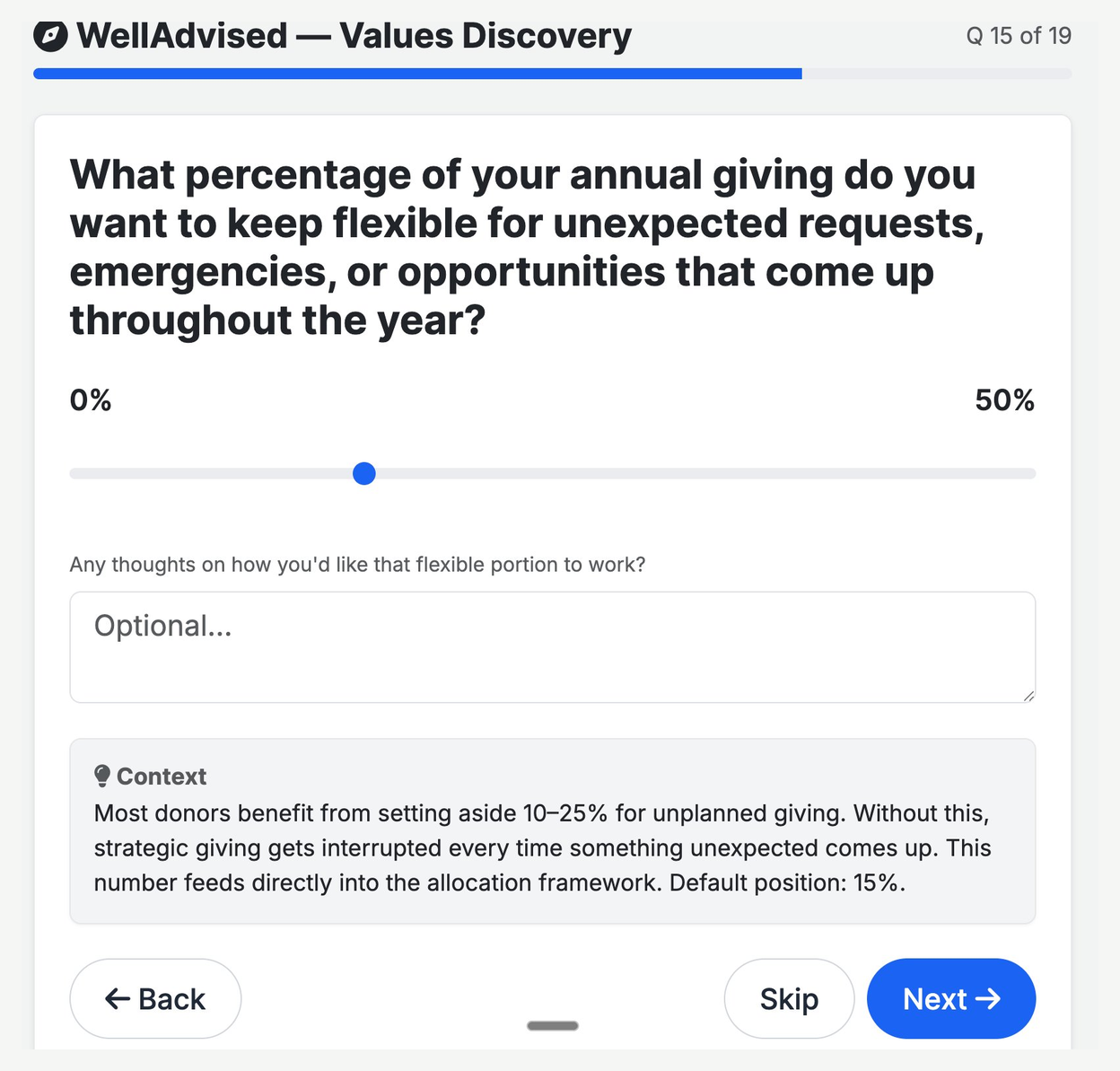
A series of questions to uncover how the client views the role of philanthropy. Is it about catching people when they fall, or building a life of flourishing, or somewhere in between? Are they investing for this year, or for generations? How much of the annual budget should be locked in, and how much should stay flexible for the moments that move them?
There is no right answer. The sliders just help the advisor see where this client sits.
A Note on Context (and Privacy)
Almost every question gives the client the option to add additional context. This text can be free-form, without consideration of spelling or grammar. All of it feeds the analysis engine. The more context, insight, and reflection the client provides, the better the resulting plan.
As an important aside, no client-identifying information is ever sent to our analysis engine. The richness comes from the substance the client shares, not from anything that identifies them.
The Optional Modules
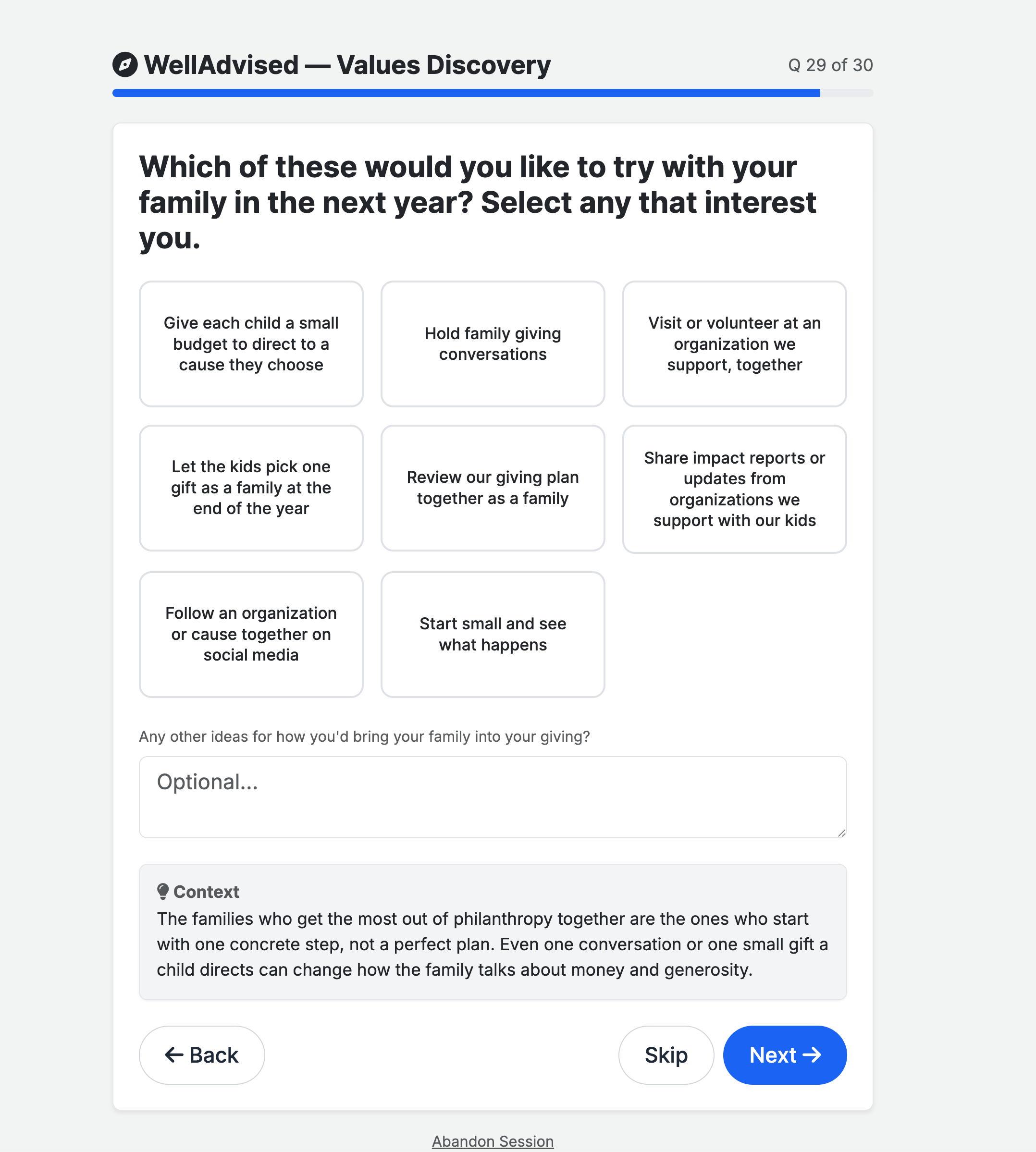
Three optional modules deepen the plan for clients where they're relevant: Faith, Next-Generation Giving, and Emergency Response.
The Next-Generation module is the one advisors tell us their clients value most. Nine different ways a parent can involve their children in family philanthropy, from having a say in where some of the giving goes to managing a small giving budget of their own to volunteering or visiting organizations together as a family. The advisor and parent walk through the options together, and the plan that results is grounded in how this specific family wants to bring the next generation into the work.
The Faith module goes equally deep where it's activated.
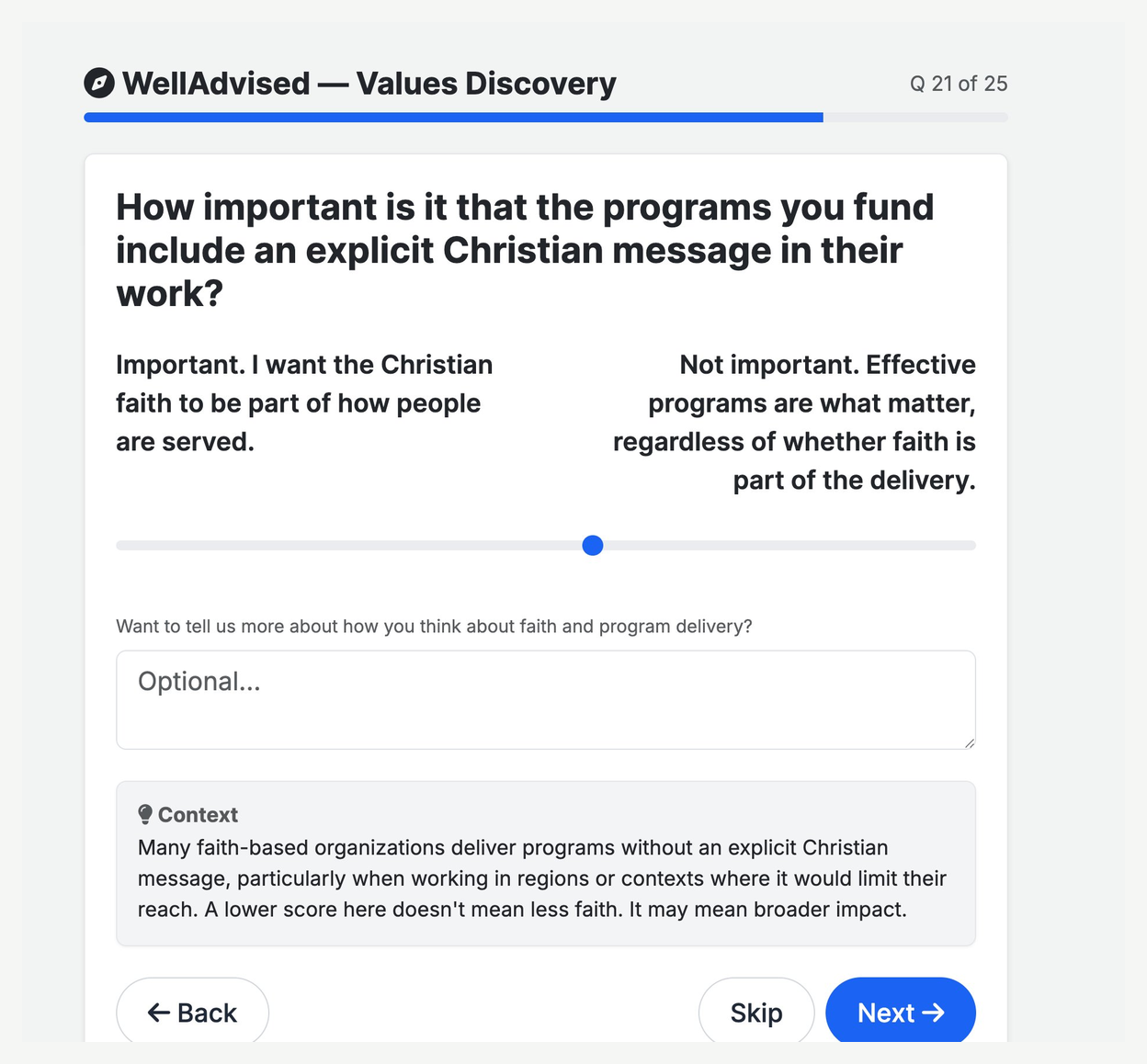
Questions like this one are why advisors with faith-rooted clients tell us this module is the part of WellAdvised they didn't know they needed. The questions don't assume. They surface the nuance.
Done With the Advisor, or Done at Home
The advisor can complete the session with the client live in a meeting. Or, they can invite the client to answer the questions in the comfort of their own home, on their own time.
When the client is done their part, the advisor gets notified. The analysis and synthesis happen together, with the advisor in the room. The relationship is preserved. The client did the input. The advisor brings the wisdom to the output.
The Handoff
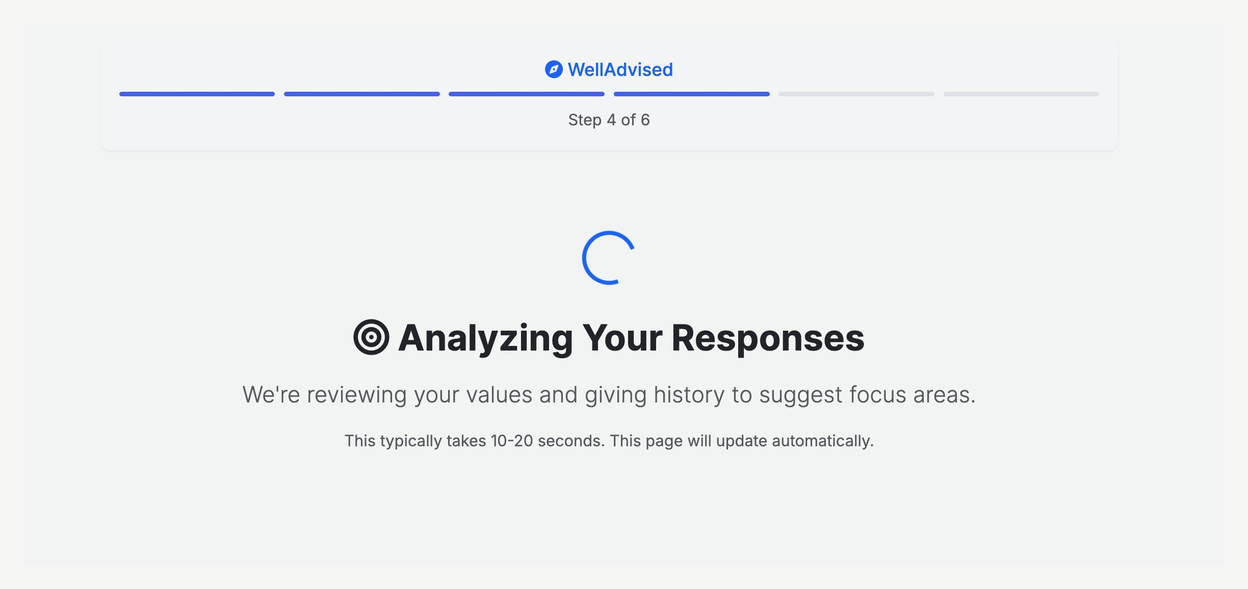
The client has answered. The advisor clicks Analyze. The system reviews their values, giving history, and reflections, and surfaces a draft Philanthropic Profile.
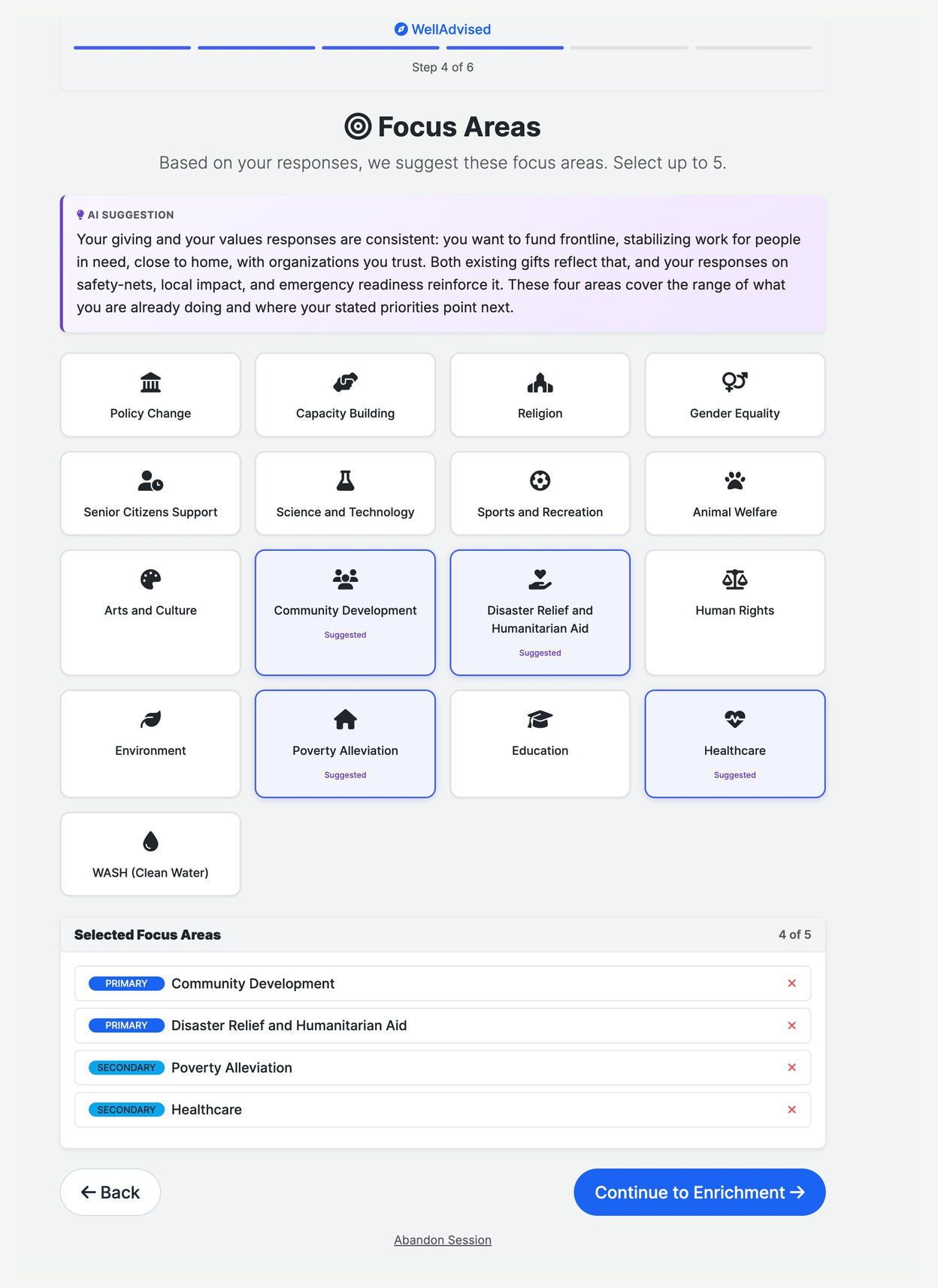
A short AI Suggestion paragraph explains what it found. Suggested focus areas appear with the rationale baked in. The advisor and client review them together, accept some, swap others, and refine the framework into a plan that fits the family.
The AI does the synthesis. The humans make the decisions.
The Output
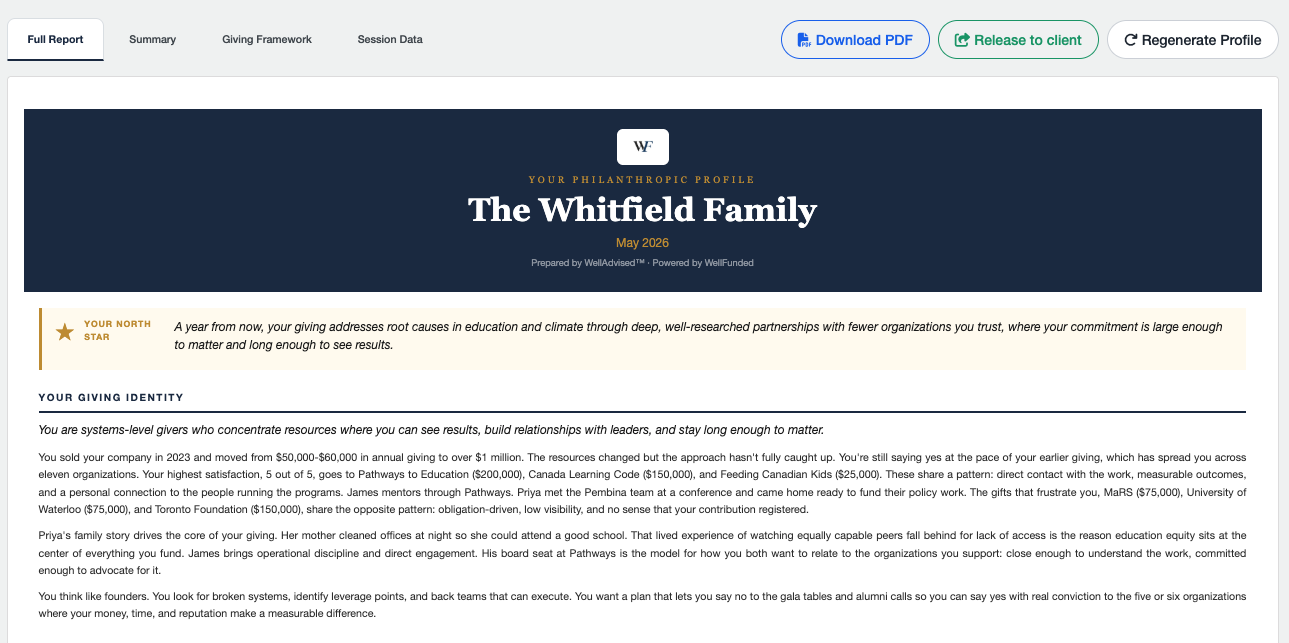
The Philanthropic Profile contains a North Star, a Giving Identity, Focus Areas (primary, secondary, supporting), a Generosity Statement, an Allocation Framework, and Giving Boundaries. Plus the optional sections for Faith, Next-Generation Giving, and Emergency Response if the client chose to activate them. Plus practical next steps for the advisor and client.
See a full sample Philanthropic Profile (PDF)
The whole thing is editable. The whole thing is shareable. The whole thing can be downloaded as a branded PDF and handed to the family.
And then Giving Plans takes over, turning the framework into a year-by-year practice the family actually returns to.
Get Started
If you'd like to see what a real Philanthropic Profile looks like, book a walkthrough. We'll show you a real session, end to end.
To learn more about the concept behind the tool, read Introducing WellAdvised. To learn how the framework becomes a yearly practice, read From Plan to Practice: Introducing Giving Plans.
Want to see WellAdvised in action? Book a walkthrough or explore the product page.
Keep reading

From Plan to Practice: Introducing Giving Plans
Giving Plans turns the Philanthropic Profile into a living, year-by-year tracking tool. See what you've committed, what you've given, and where the plan is on track.

Introducing WellAdvised: From Small Talk to Strategy
WellAdvised is an AI-powered philanthropic planning tool that helps advisors turn values conversations into professional, shareable Philanthropic Profiles.

Finding the Signal: Smart Search and Recommendations
How WellFunded's new natural language search helps advisors cut through 86,000 charities to find the right one, and stand behind it.
Try it in WellFunded
Log in to see this in your account, or visit the help centre for step-by-step walkthroughs.